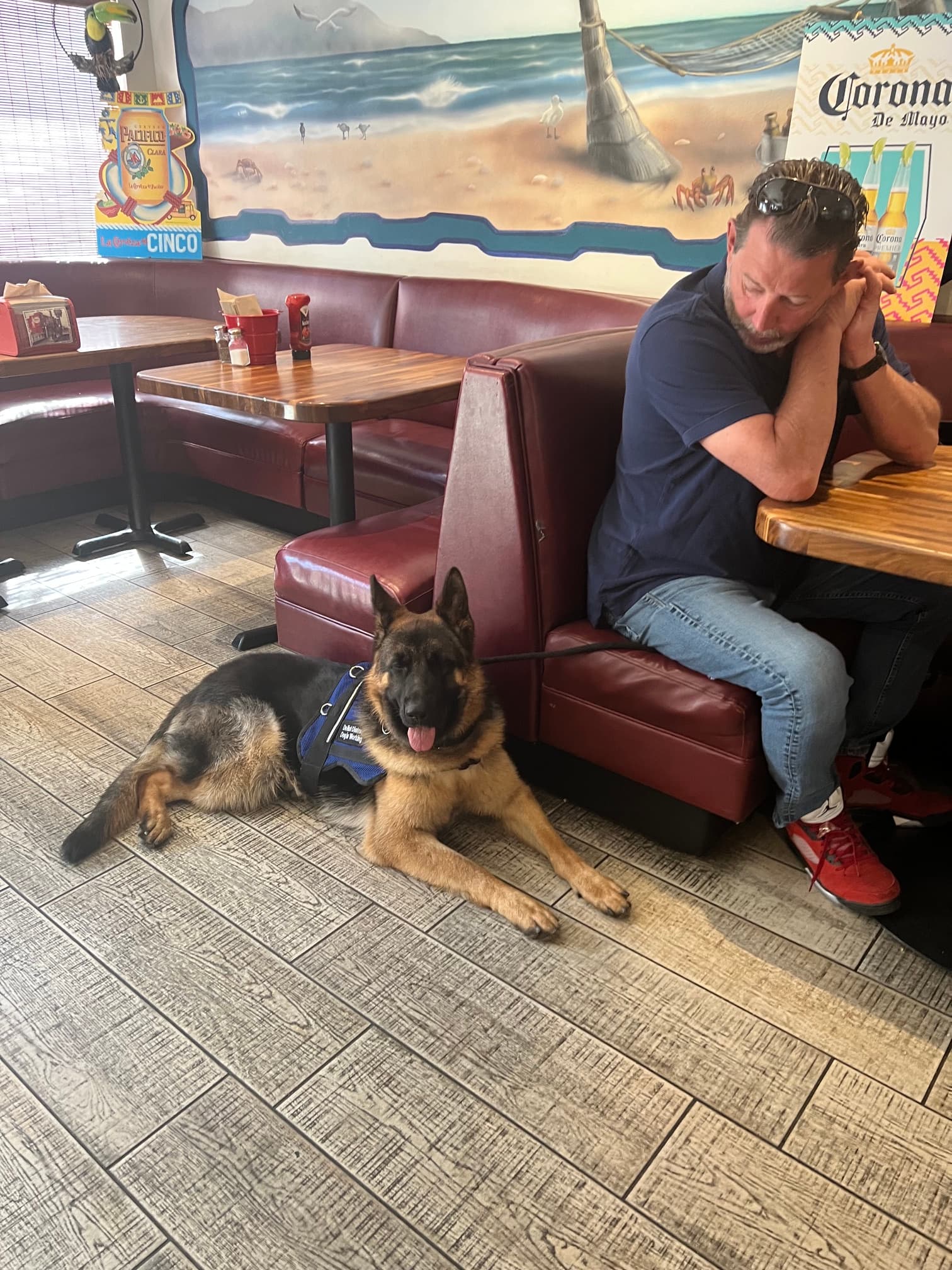
Service dogs are working animals, not pets. Federal law protects the right of people with disabilities to travel with them—but the rules change depending on whether you are in a restaurant or on an airplane. Understanding the difference between the ADA and the Air Carrier Access Act is the single most important thing every handler and every airline employee needs to know.
The Americans with Disabilities Act (ADA)
The ADA governs public places: stores, restaurants, hotels, hospitals, and ground transportation. Under the ADA:
• A service dog is a dog individually trained to perform a task that mitigates a disability.
• Professional training or certification is not required. Owner-trained dogs have the same legal status.
• No vest, ID card, or paperwork is required.
• Staff may ask only two questions:
1. Is this a service animal required because of a disability?
2. What work or task has the dog been trained to perform?
• They may not ask about the nature of the disability, demand documentation, or require a demonstration.
Emotional support animals are not service animals under the ADA. Comfort alone does not qualify.
The Air Carrier Access Act (ACAA) and the 2021 DOT Rule
Air travel is different. Once you board the aircraft, the Air Carrier Access Act applies, not the ADA. In 2021 the Department of Transportation issued a final rule that still governs travel in 2026. Key points:
• Only dogs qualify as service animals.
• Emotional support animals are treated as pets and may be charged pet fees.
• Psychiatric service dogs that are task-trained are treated the same as any other service dog.
• Airlines may require only two official DOT forms:
1. The U.S. DOT Service Animal Air Transportation Form (attesting to health, behavior, and training).
2. The Service Animal Relief Attestation Form (for flights scheduled 8 hours or longer).
Airlines may require the form up to 48 hours before departure if the reservation was made earlier. They must accept the official DOT form. They may not require:
• Third-party certification
• Professional training school certificates
• Registry cards or “official” service dog IDs
• Letters from doctors beyond what the form already covers
• Any other documentation except what foreign countries or U.S. territories require for animal entry
The dog must remain under the handler’s control, fit in the foot space, and not pose a direct threat or cause significant disruption. Airlines may refuse a dog that is aggressive, out of control, or not housebroken—but they cannot refuse simply because the dog was owner-trained or lacks a vest.
Practical Takeaway for Handlers
Carry a completed DOT form. Submit it through the airline’s portal when required. If a gate agent demands extra paperwork or a third-party “verification,” calmly state that the DOT form is the only documentation permitted under 14 CFR Part 382. Ask for the Complaints Resolution Official (CRO) if needed. Document names, times, and statements. Legitimate service dog teams have clear federal rights; the law was written to protect them, not to create new obstacles.
Disclosure
This post is for general informational purposes only and does not constitute legal advice. Service animal laws and airline policies can change. Always verify current requirements with the U.S. Department of Transportation, the airline you are flying, and a qualified attorney if you need specific guidance for your situation.
“When ‘Verification’ Becomes Harassment: The Human Cost of Bad Actors.”